
The Regional District of Okanagan-Similkameen (RDOS) board will consider providing funding to a local organization that has successfully recruited doctors and healthcare professionals to the region over the past 15 years.
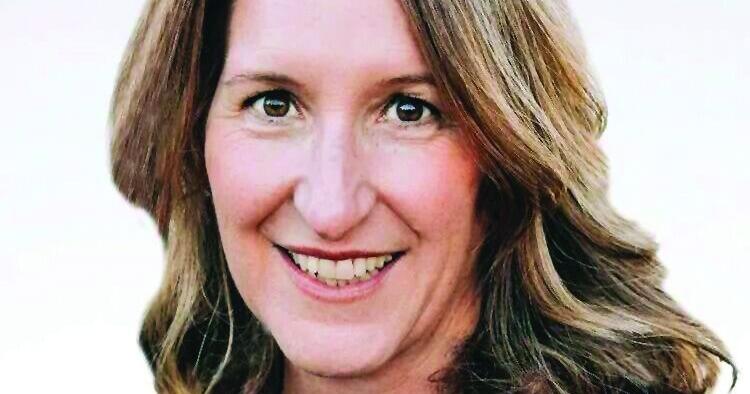
During a recent presentation, Tracey St. Claire, executive director of the South Okanagan Similkameen (SOS) Division of Family Practice, and board chair Dr. Jennifer Begin asked the RDOS to consider allocating up to $100,000 during upcoming budget discussions.
Their presentation outlined the division’s role in recruiting and retaining family physicians and nurse practitioners, especially in rural and underserved communities.
The Division of Family Practice includes physicians, nurse practitioners, and midwives. “We help to support and organize them,” said Begin. “Family doctors often operate outside the mainstream health system, with a lot of independence, which can make coordination difficult. We bring them together.”
St. Claire said the division works closely with local healthcare professionals to ensure primary care access for all South Okanagan and Similkameen residents. “We have a high level of collaboration here—more so than in other parts of the province,” she noted. “We can’t control policies or pay structures, but we can create a system that works.”
The division supports care across the spectrum—from emergency and maternity to palliative, mental health, substance use, walk-in clinics, after-hours services, and hospital care.
“We focus on recruiting and retaining family doctors and nurse practitioners,” said St. Claire. “What we’ve found is that happy providers stay. Where we’ve had the most success is in helping them pitch in and share the workload.”
Historically, rural physicians handled all aspects of care alone. The division helps distribute that responsibility through a team-based model. “We spend a lot of time innovating around the gaps we’re seeing,” said St. Claire.
While the number of healthcare providers has remained stable, Begin said the demand for care has grown due to rising patient numbers and complexity. “Retention is key. In smaller communities, losing even one provider has a big impact.”
Since the division’s founding, more than 40 additional physicians and nurse practitioners have been hired in Summerland, Penticton, and Okanagan Falls. “We’re seeing a shift away from 80-hour work weeks,” said Begin. “Doctors are working in shared practices and across services. It’s collaborative.”
St. Claire noted that in 2017, the division projected that 50% of family doctors in the region would retire within a decade.
“The average age was 55. We knew we had to do things differently. Now, instead of one physician running a full practice, two may share that workload.”
Most doctors recruited in recent years are still practicing in the region. “That’s a big endorsement of our team-first model,” said St. Claire. “While many patients remain unattached, we won’t stop until everyone has access.”
Originally aiming to attach 15,000 patients, the division has already surpassed 23,000. “It’s working,” said St. Claire. “It’s not enough yet, but we’re on the right path.”
The division’s model is now being studied by other municipalities across B.C. “We have an 82% success rate in attaching patients to providers—higher than anywhere else in the province,” said Begin. “But we want 100% attachment.”
In 2018, a community inpatient program brought doctors to rural hospitals in Oliver and Osoyoos. The success of that initiative has helped attract even more healthcare professionals.
The recently-opened Colleen Schneider Medical Centre in Penticton now has 42 doctors signed up for shifts and provides virtual care across the region. While the province doesn’t support hands-on administrative work by the division, the South Okanagan Similkameen Healthcare Society now manages clinic operations.
St. Claire emphasized the importance of positive communication around healthcare. “When people think they’re walking into a fire, they don’t want to come. But if they feel supported by the community and colleagues, they’ll stay.”
She acknowledged ongoing challenges, particularly in rural areas, including housing and childcare for healthcare professionals. The division is committed to finding solutions.
Currently, the division receives $65,000 annually from the province to support recruitment efforts. An additional $100,000 from RDOS would enhance their outreach and support services.
“I think we can attract more providers if we better tell the story of why this is a great place to live and work,” said St. Claire.
Dr. Begin concluded by saying many healthcare professionals have already chosen to stay long-term in the region, a testament to the division’s success.
link