
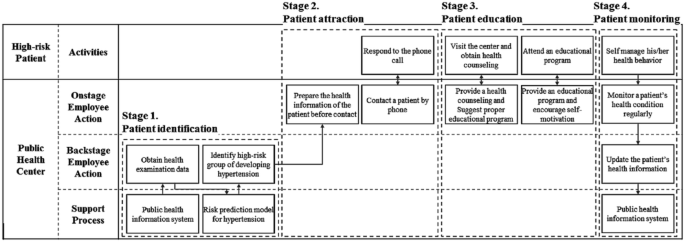
The experiment was conducted over a two-month period to evaluate the effects of different initial contact strategies on patient engagement. A total of 480 high-risk individuals were randomly assigned to three treatment groups, as outlined in the “Experimental design” section. The primary response variables were the phone call reception rate (RV1), health center visit rate (RV2), and patient satisfaction with the phone conversation (RV3).
Table 3 presents the summary statistics from the experiment. Among the 480 targeted individuals, 306 successfully received a phone call, resulting in an overall reception rate of 63.75%. Among those who received the call, only 22 patients (7.19%) subsequently visited the public health center within two weeks.
The data indicate that the use of SMS notifications prior to phone calls (Treatment 2 and Treatment 3) increased the likelihood of patients answering phone calls. This effect is shown by the highest phone call reception rate in Treatment 2. Meanwhile, Treatment 3, which combined SMS notification with a customized phone conversation, resulted in the highest health center visit rate and the highest patient satisfaction score.
To evaluate the statistical significance of each design parameter (DP), appropriate hypothesis tests were conducted based on the experimental structure (Table 4). The analysis was organized around two binary design parameters: DP1 (use of SMS) and DP2 (customization of phone conversation).
The response variable RV1 (phone call reception) is a binary variable indicating whether a participant answered the incoming phone call. The SMS message was sent prior to the phone call, and participants could only decide whether to answer based on the presence or absence of the SMS. They had no prior knowledge of the content or customization of the phone conversation, which was only revealed after the call was answered. Given this temporal sequence, the appropriate comparison for evaluating the effect of DP1 was between Treatment 1 (no SMS) and the combined group of Treatment 2 and 3 (received SMS) (Table 4). A chi-squared test was used to assess differences in reception rates. With a total sample size of 480 and all cell counts exceeding 5, the test assumptions were fully met.
RV2 (health center visit) is a binary variable that indicates a participant visited a health center following the phone contact. Two separate comparisons were conducted to assess the isolated effects of each design parameter. To evaluate DP1, Treatment 1 was compared with Treatment 2 (Table 4), since both groups received standardized phone calls, thereby isolating the effect of the SMS alone. Due to the small number of visits (n = 22), which resulted in some cell frequencies falling below 5, Fisher’s exact test was used to ensure valid statistical inference. To assess DP2, Treatment 2 was compared with Treatment 3 (Table 4), as both groups had received the SMS, thereby controlling for DP1. The sample size for this comparison was sufficient, and a chi-squared test was applied.
RV3 (patient satisfaction score) measured participant satisfaction with the phone call using a five-point Likert scale and was treated as a continuous variable. Importantly, this measure captured perceptions exclusively regarding the phone conversation itself, not the SMS or other elements. Furthermore, both Treatment 1 and 2 received standardized phone calls, identical in structure and delivery format. As such, the grouping of T1 and T2 into a single comparison group is methodologically sound for evaluating DP2, isolating the effect of the customized phone experience in Treatment 3. Given the approximately symmetric distribution of scores and a sufficiently large sample of respondents, a two-sample t-test was used to compare mean satisfaction scores between groups.
The results indicate that DP1 (SMS notification) had a significant effect on phone call reception rates (RV1), confirming that patients who received advance SMS notifications were more likely to answer phone calls from the health center (Table 5). Additionally, DP2 (customized conversation) significantly improved health center visit rates (RV2), suggesting that personalized health risk discussions were effective in motivating patients to seek medical attention. However, neither DP1 nor DP2 had a statistically significant effect on patient satisfaction (RV3). Although mean satisfaction scores were slightly higher for Treatment 3, which included both SMS notification and customized conversation, the observed differences were not statistically meaningful.
The results demonstrate that DP1 (use of SMS) had a statistically significant effect on RV1 (phone reception rate). Patients who received an SMS prior to the phone call (Treatment 2 and 3) were significantly more likely to answer the call from the health center than those who did not receive any SMS (Treatment 1), with a reception rate of 72.2% versus 46.9% (p = 0.0106). This finding highlights the importance of pre-call SMS messaging as a mechanism for enhancing patient responsiveness and facilitating communication.
For RV2 (health center visit rate), two separate comparisons were conducted to isolate the effects of DP1 and DP2. The comparison between Treatment 1 and Treatment 2, isolating the effect of DP1 (SMS), revealed no statistically significant difference in visit rates (5.6% vs. 4.9%, p = 1.0000), suggesting that SMS notifications alone did not increase the likelihood of a health center visit. However, the comparison between Treatment 2 and Treatment 3, targeting DP2 (customization of phone conversation), showed a higher visit rate in the customized group (13.2% vs. 4.9%, p = 0.0862). Although this difference did not meet the conventional threshold for statistical significance (p < 0.05), it represents a meaningful behavioral impact, with the visit rate nearly tripled. The effect size, calculated as the risk difference (13.2% – 4.9% = 8.3% points), and an odds ratio of 2.97, indicates that patients who received customized risk communication were nearly three times as likely to visit the health center compared to those who received standardized messaging. This suggests that even in the absence of statistical significance, the intervention had a practically important effect in terms of public health behavior change.
With respect to RV3 (satisfaction with phone conversation), the results indicate no statistically significant difference in satisfaction scores between Treatment 3 (customized conversation) and the combined group of Treatment 1 and 2 (standardized conversation). Mean satisfaction scores were 4.83 and 4.60, respectively (p = 0.3644). Although the scores trended higher in the customized group, this difference was not large enough to reach statistical significance.
The statistically significant increase in phone call reception among patients who received an advance SMS suggests that prior notification can play a critical role in reducing hesitation and increasing receptiveness to public health outreach. By informing patients in advance about the purpose and timing of the call, the SMS may help reduce psychological resistance and elevate the perceived legitimacy of the health center’s outreach efforts. This simple intervention thus enhances communication effectiveness at minimal operational cost.
Although the effect of SMS on subsequent health center visits was not statistically significant, the customization of phone conversations showed meaningful potential in encouraging patient follow-up. Patients who received tailored conversations that highlighted specific health risks such as high sodium intake or insufficient physical activity demonstrated substantially higher visit rates. This result, despite a p-value above 0.05, reflects a clinically and behaviorally important difference, with a nearly threefold increase in health center attendance. Such a targeted behavioral approach likely enhances the personal relevance of the message and may activate risk perception and self-efficacy, both known predictors of health-related decision-making.
As for satisfaction with the phone call experience, the absence of statistically significant differences should be interpreted in light of the study design. All participants received calls of consistent structure and tone, with only the content varying by treatment. The lack of difference suggests that structural elements such as clarity, tone, and duration may outweigh message personalization in shaping overall satisfaction. However, the modest upward trend in satisfaction scores for customized conversations still points to the potential for enhanced engagement and information retention.
Taken together, these findings support the integration of behaviorally informed, low-cost communication strategies into patient outreach programs. The combination of advance SMS notifications and tailored conversation content appears not only feasible but also functionally impactful, particularly in increasing initial engagement and motivating health-seeking behaviors. As such, they may serve as scalable levers to enhance public health intervention outcomes, especially in resource-constrained healthcare environments.
link